

By Darren Schwartz, Chief Program Officer at Jewish Federation of San Diego
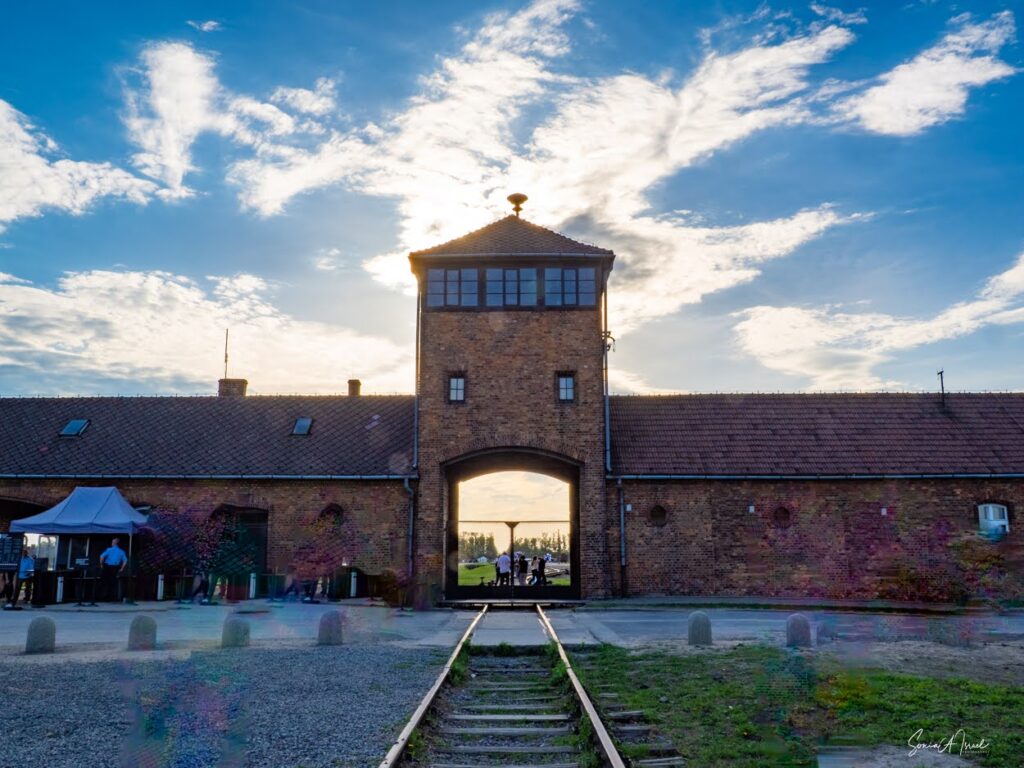
On January 27, the world will observe International Holocaust Remembrance Day, marking the liberation of Auschwitz and honoring the six million Jews and millions of other victims murdered by Nazi Germany and its collaborators. This day is not only about memory. It is about responsibility; our responsibility to remember accurately, to teach honestly, and to ensure that the lessons of the Holocaust remain urgently relevant in our own time.
At Jewish Federation of San Diego, we believe that Holocaust education is not solely a Jewish concern. It is a civic imperative. At a moment when antisemitism is rising, historical knowledge is eroding, and misinformation spreads faster than truth, teaching the lessons with the Holocaust has become one of the most powerful tools we have to strengthen critical thinking, moral courage, and democratic values.
That is why Federation is launching the Legacy of Light Goldberg Institute for Holocaust Education, the largest initiative in our history: a comprehensive, community-wide investment in Holocaust education, made possible by a transformative philanthropic gift by Lee Goldberg. Central to this effort is our new Academy of Critical Thinkers (ACT), a professional development program open to all public high school teachers designed to support educators as they teach the Holocaust with rigor, humanity, and relevance.
The Stakes: What Happens When We Do Not Teach
National research paints a troubling picture. Large numbers of Americans, especially younger generations, lack basic knowledge about the Holocaust. Significant numbers believe fewer than six million Jews were murdered, and an alarming minority even believe the Holocaust did not happen or that the Jews caused the Holocaust. Exposure to Holocaust denial, distortion, and Nazi symbolism, particularly online, is widespread.
This erosion of historical understanding has consequences. Research consistently shows that Holocaust education is associated with lower endorsement of antisemitic beliefs and conspiracy theories. Students who learn about the Holocaust are more likely to reject misinformation and less likely to accept anti-Jewish tropes. In other words, education is not a neutral act; it is a protective one.
The Promise: What Holocaust Education Actually Does
Decades of research demonstrate that high-quality Holocaust education delivers benefits far beyond historical knowledge. Students who receive Holocaust education show stronger pluralistic attitudes, greater openness to differing viewpoints, and a deeper willingness to stand up for others facing discrimination or bullying. They are more likely to challenge biased information, intervene in intolerant behavior, and engage in thoughtful civic discourse.
The impact is even stronger when education includes survivor testimony. Students who learn directly from survivor narratives (whether in person or digitally), score higher on measures of critical thinking, social responsibility, civic efficacy, and comfort with difference. These effects persist into young adulthood, long after students leave the classroom.
Holocaust education, at its best, teaches students not only what happened, but how it happened, and how ordinary people, institutions, and societies made choices with extraordinary consequences.
What San Diego Teachers Are Telling Us
To understand how Holocaust education is actually unfolding in classrooms, Federation surveyed educators participating in the inaugural cohort of its Academy of Critical Thinkers (ACT). Their responses were candid, thoughtful, and sobering.
Teachers across disciplines, from English and history to Civics/Government and ethnic studies, expressed a strong commitment to teaching the Holocaust. They unanimously told us that they want students to reflect on their own values, identities, and capacity for empathy, as their primary student learning outcome when teaching about the Holocaust. Additionally, the majority also said that they want their students to see connections between the Holocaust and current issues, such as racism, antisemitism, hate speech, extremism, and authoritarianism.
At the same time, teachers described significant challenges: students’ lack of background knowledge; exposure to propaganda and social media misinformation; the emotional intensity of the subject; and uncertainty about how to connect historical lessons to contemporary issues without appearing partisan.
One educator wrote, “We have many students who get their news through social media, and they come in with certain bias against Jewish people.” Another shared the difficulty of responding when students question whether the Holocaust even occurred.
Teachers overwhelmingly asked for more survivor testimonies, primary sources, age-appropriate lesson plans, and guidance on addressing modern antisemitism, propaganda, and “othering.” Their message was clear: they want to do this work, they want to do it well, and they need community partnership to do so.
Holocaust Survivors Are Our Neighbors
Here in San Diego, the Holocaust is not distant history. According to the most recent information available, approximately 350 Holocaust survivors live in our region today, alongside tens of thousands of descendants of survivors and victims. More than one-quarter of Jewish adults in San Diego are descendants of someone directly impacted by the Holocaust.
Remembering the Holocaust is not abstract for our community. It is personal. Nearly all Jewish adults in San Diego identify remembering the Holocaust as an essential or important part of Jewish life. As survivors age, the urgency to preserve their voices, and to ensure that future generations encounter their stories, has never been greater.
Federation’s Role: From Memory to Action
Jewish Federation of San Diego is dedicated to advancing Holocaust education, preserving survivor testimony, and partnering with schools and institutions across our region. Our expanded initiative builds on that foundation, recognizing that today’s educational landscape demands new tools, deeper support, and sustained investment.
The Academy of Critical Thinkers is designed not only to strengthen Holocaust instruction, but to equip educators with skills in critical thinking, and ethical reasoning – skills students need to navigate an increasingly complex world. By supporting teachers, we hope to reach thousands of students and benefit our community, for everyone. By grounding education in historical truth and human experience, we help build resilience against hatred and extremism.
Holocaust education is not about assigning guilt or drawing simplistic analogies. It is about understanding how prejudice becomes policy, how dehumanization becomes normalized, and how silence enables injustice. It is about empowering young people to recognize warning signs and to see themselves as moral actors with choices.
A Shared Responsibility
On this International Holocaust Remembrance Day, we remember those who were murdered. We honor those who survived. And we re-commit ourselves to teaching the truth – clearly, courageously, and compassionately.
Holocaust education is one of the most effective ways we know to strengthen democratic values, counter antisemitism, and foster empathy and responsibility in the next generation. It requires partnerships – between educators, community organizations, philanthropists, and the public.
At Federation, we recognize that many organizations have already been working to advance Holocaust Education and we aim to be a central hub that advances best practices, inspires collaboration, and increases impactful Holocaust education across San Diego County. Together we will ensure that memory is not lost, lessons are not forgotten, and history continues to teach us how to build a more just and humane future.